Friday, July 19, 2013

CPBB Launches Priority Based Budgeting in The City of Shawnee, Kansas


The CPBB kicks-off Priority Based Budgeting with the City of Shawnee, Kansas today!

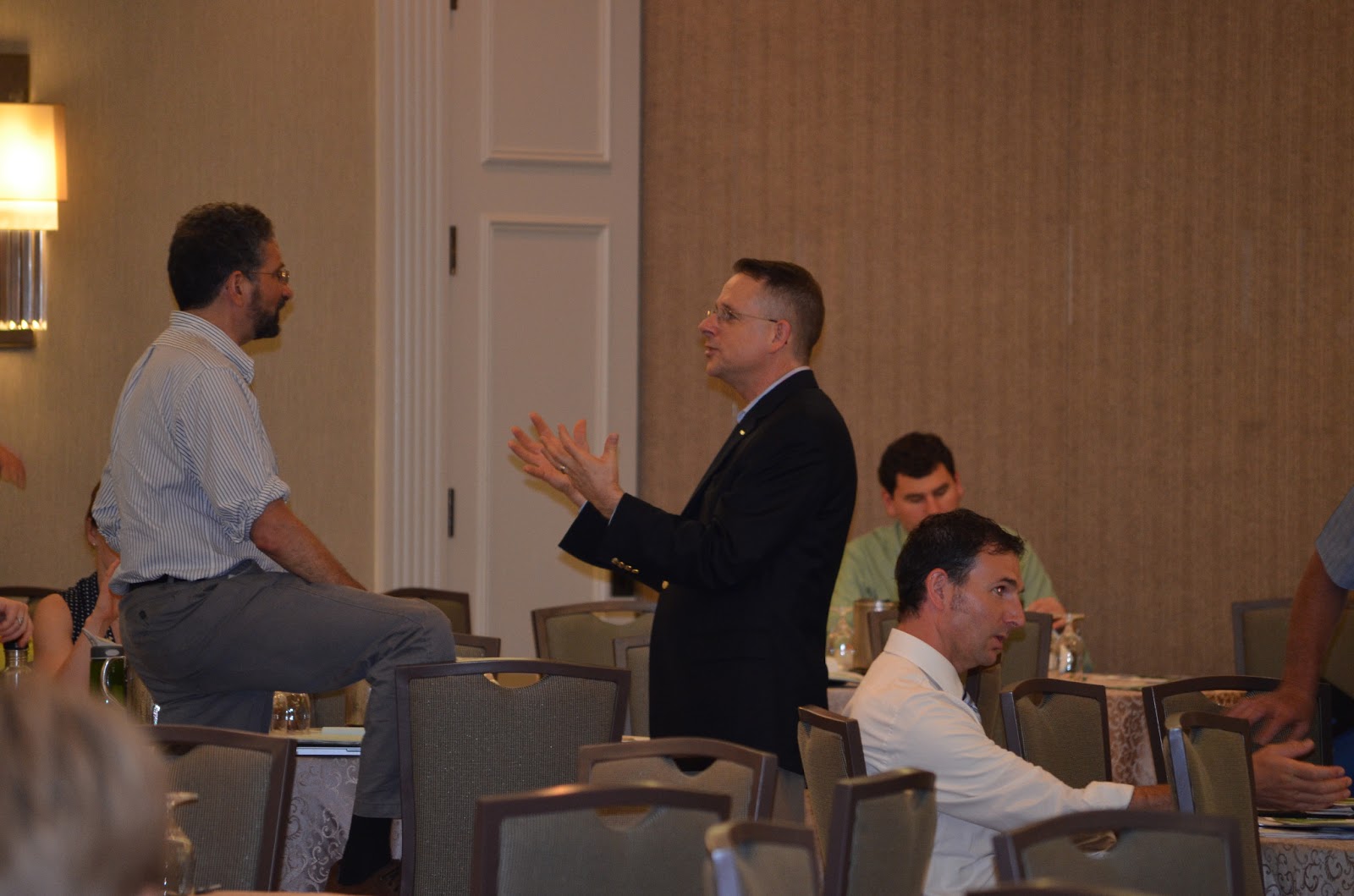
The Center for Priority Based Budgeting is leading the City of Shawnee through a facilitated exercise to develop comprehensive definitions for the City's Results. These Results will define what every community must ask themselves: What are we here to do? See initial Shawnee PBB launch agenda packet here.

Participants in the "brainstorming" exercise will contribute by expressing all of the many ways that the organization's Results can be achieved, and then organizing all of those answers into similarly themed groups that form the basis for each of the Result definitions.

The technique is called Affinity Diagramming - a proven and powerful method that: a) gathers large and comprehensive amounts of information about all of the different ways the City¹s Results can be achieved, and b) does so in an extremely efficient manner that makes the most optimal use of the participant¹s time while still producing complete definitions.


City of Shawnee, KS City Hall
Following the exercise, CPBB will produce draft "Result Maps" for each of the City¹s stated Results. These "Result Maps" provide a simple, graphic way to organize and articulate the concepts identified in the facilitated exercise as the definitions around each Result. "Result Maps" serve as one of the key criteria for program scoring.

The CPBB wishes to thank and congratulate the City of Shawnee, KS for their work in Priority Based Budgeting.


Thursday, July 18, 2013

"DATA VISUALIZATION" for Local Government: The CPBB Web-based Fiscal Health Diagnostic Tool


"The Unique Lens" is itself a product of the process as are the tech tools that have opened up a view on local government strategy, culture, management and decision-making unlike anything else!


Fiscal Health Diagnostic Tool
The most effective and affordable local government fiscal tool available
In the midst of serious fiscal challenges, it will be particularly important to stay true to the values that will carry us through these difficult times. The goal of fiscal health was established in consideration of the need to adjust the budgeting process to more effectively align resources with the City’s priorities. - City Manager’s Budget Message - City of Seaside, California
The Center for Priority Based Budgeting has seen its diagnostic approach to achieving Fiscal Health and the development and utilization of its unique and innovative “Fiscal Health Diagnostic Tool” profoundly change the conversation between local government managers, finance professionals and elected officials.   These are but a few of the powerful ways Fiscal Health has been used to help local government leaders achieve long-term financial sustainability.  

In 2012, Wheat Ridge City Council included the identification of core services as a top priority goal in their strategic plan.  The City was already operating at a base level of service due to budget cuts implemented to cope with the nationwide economic downturn.   In addition, the City continued to face a long-term lack of funding for Capital Improvement Projects (CIP).  With no dedicated revenue stream to fund more than 250 million in infrastructure projects and a systemic budget shortfall, 2014 would be the final year the City could fund minimal preventive maintenance projects with a transfer from the General Fund. 
 
The Fiscal Health Model provided a new visual tool to help facilitate budget discussions.  The Fiscal Health Model allows staff to develop live scenarios to provide elected officials an instant picture of the financial impacts of their decisions. One of the more powerful traits of this process is how it has equipped Council and staff with information presented in a format that is resulting in new conversations around budget and resource allocation.

The power of the Fiscal Health Model was realized on May 19th, 2012 at the City Council’s annual
planning retreat.  City Manager Patrick Goff used the model to show Council members how different
scenarios affected the City’s financial situation.  Wheat Ridge has a backlog of more than $250 million in unfunded CIP projects.  The Fiscal Health Model allowed staff to illustrate to Council that given the current fiscal situation, “cutting” the budget to solve the problem was not a viable option. The City needed to identify new dedicated revenue sources to ensure the success of these projects in the future.

One Council Member in particular had a very interesting reaction to this new way of looking at budgeting opportunities.  Although he believes there are still ways and areas to find efficiencies to save money, he now sees and concedes to the fiscal realities the City faces.  He realizes, as we all do, that no amount of reductions or cuts would ultimately solve the City’s long-term budget issues related to capital improvements.

Using the Fiscal Health Model has helped staff obtain a deeper understanding of our budget variances.  Every year staff would find that our actual expenses were much lower than our budgeted amounts.  Looking at these phenomena, understanding the causes, and working to eliminate them has helped staff present a more accurate picture of the City’s financial situation.
The CPBB congratulates the City of Wheat Ridge, CO for their effective and innovative implementation of Fiscal Health!

Seeking clearer understanding and communication with your elected officials?
·      Elected officials have adopted Fiscal Health as their preferred means of communicating with staff regarding any decisions brought before them that potentially might have a fiscal impact – asking staff to “show us” those impacts using the principles of Fiscal Health as the primary communication device.  
 Working through challenging conversations about compensation with staff or bargaining units?
·      Organizations have entered into labor negotiations with their bargaining units using Fiscal Health as a way to quickly agree on the assumptions behind the City’s fiscal forecasts, therefore establishing a basis of trust in the discussion – then modeling the bargaining units’ requests to demonstrate impacts to the City’s fiscal position.


Weighing various financial related decisions, with complex variables, and long-term impacts?
·      Fiscal Health modeling is a powerful scenario-planning tool, providing easy to understand visualization of data. It has even been used to help a Water and Sewer District prioritize capital projects, understand the ongoing impacts of those projects, and effectively develop rate increases by better understanding their ongoing and one-time sources and uses of funding in their operation.
Local governments choosing to implement the concepts of Fiscal Health as a treatment regimen are making substantial progress because they are doing the analytical work required to more accurately diagnosis the reasons behind their fiscal issues and then determining the best treatments that lead to a viable cure. Once an organization is on the road to being fiscally healthy, it can then become more financially sustainable by implementing a Fiscal Wellness regimen centered around the principles of Priority Based Budgeting.
CPBB will help you diagnose which of these flexible and attainable objectives best meet the needs of your organization and then tailor your needs to develop the  level of engagement that is the “best fit” for your organization as it strives to achieve true “ Fiscal Health and Wellness”.

CPBB strives to be exceptionally cost-conscious and affordable in its work with local governments, a key reason for establishing ourselves as a mission-driven organization.   We are committed to successfully meeting the goals of your community and achieving the desired outcomes of our work together.


Keep an eye on the CPBB blog for further updates and to feed the "local government high" inspired by the "Summit." Sign-up for our social media pages so you stay connected with TEAM CPBB!

 facebook  twitter  LinkedIn

If you're thinking of jumping into the world of Fiscal Health and Wellness through Priority Based Budgeting we would certainly like to be part of your efforts! Contact us to schedule a free webinar and identify the best CPBB service option(s) to meet your organization's particular needs.

Wednesday, July 17, 2013

CPBB "Summit" Local Government High: ICMA & AFI Keynote Address Recap


What an exciting CPBB 2013 "Summit of Leading Practices" Annual Conference last week! I know we are still riding high from the creative energy and innovative concepts discussed during the two day "Summit." We hope you're feeling the "local government high" and take this energy home and apply it in your organization! Thanks to all conference attendees, sponsors, exhibitors, partners and friends!

Beyond the "high", we also left the "Summit" full of  innovative "Leading Practice" inspiration and we're hungry for more! To satisfy your infectious cravings, the CPBB is revisiting each conference session on this blog over the next 1-2 weeks. The intent is to recap the energetic session presentation(s) and reinforce the innovative "leading practice" concepts discussed at the "Summit!"

To launch this blog series, we will start with the exciting conference key-note address(es) by Cheryl Hilvert (ICMA) and Pam Muse (AFI). Enjoy! 

Kick-off to the Conference from ICMA and the Alliance for Innovations

The International City/County Management Association (ICMA) and the Alliance for Innovation were the co-sponsors of this year’s CPBB conference—“A Summit of Leading Practices.” 

 
The theme of this year’s conference was chosen for a very specific reason: because of the leadership of ICMA and the Alliance, “Leading Practices” are being established to set a direction for local government management, and for the sustainability of our communities. We wanted to focus a spotlight on these “Leading Practices” in order to demonstrate how they work together, how they can build upon Fiscal Health and Wellness through Priority Based Budgeting, and how they can be a roadmap for any local government that is on the path of greatness.

The Director of ICMA’s Center for Management Strategies, Cheryl Hilvert, described why ICMA has embarked on this exciting new endeavor to establish “Leading Practices.” CMS began as a great idea  to expand beyond education and technical assistance in "prevailing practices" in local government management (prevailing practices being those best approaches to work that are in place in most local governments today) to delivering assistance to managers who are interested in learning about those innovative "leading and emerging practices" that are in place in only the more creative and risk tolerant communities.


Together with the Alliance for Innovation, the intent is to identify and research emerging best practices in local government, evaluate where these practices are being implemented, and most importantly judge the outcomes of these practices. Among the criteria for CMS to establish a leading practice is that it has to be "scalable" so that organizations large and small, city or county or otherwise, could implement them. And again, most importantly, there must be proven, demonstrable and repeatable outcomes that result from a community implementing these practices.

It is the goal of CMS to bring research, case studies, education and technical assistance to managers who would like to see evidence that these strategies actually work in a local government setting and proven concepts that can be transferred to other jurisdictions that may not have the time or resources to pursue such innovation on their own.

ICMA's Center for Management Strategies just turned one! We have accomplished a lot since the Center for Management Strategies was "born" last July 1.  We have lots to do in terms of bringing new research topics forward.  Through our service provider network, we need to assist managers by making implementation of those leading practice areas easier for local governments.  We also need to to raise awareness of the work we are doing  so that more managers know what is available to assist them in bringing innovation and leading practices to their communities!

Membership to CMS is FREE so be sure to sign up and take advantage of this tremendous resource. Thanks to everyone who has assisted us thus far and      now. . . on to year 2!!!!


To learn more visit: CMS Website, CMS Blog and CMS Group


Alliance for Innovation

And we also heard from the Alliance for Innovation’s Pam Muse as she articulated the role of the
Alliance as the “Bell Labs” of local government, vetting “Emerging Practices” as they go through the testing and research process that ultimately results in their becoming a “Leading Practice.”

The Alliance for Innovation stands at the cutting edge of local government innovation. AFI's unique and pivotal role in identifying emerging practices is what led to the discovery of Priority Based Budgeting back in 2008, when the process was first developed and implemented in a County environment. Pam Muse was first on the scene to witness the results of that initial implementation and encouraged the widespread release and dissemination of knowledge about PBB to local governments everywhere. Five years later, in front of 160 conference attendees, many of whom have already or are in the midst of implementing the process, Pam addressed the critical importance of the Alliance as a testing ground of new ideas that have the potential of helping change local governments in significant ways.


While the showcase of PBB is significant, the Alliance also showcases a variety of innovative local government practices. Contact Pam to find out how your community can benefit from the experience and expertise of the Alliance for Innovation.

Additionally, in an effort to ensure everybody has access to the conference session presentation slides, we've set up two additional folders within the ICMA Knowledge Network Center for Management Strategies Group and DropBox to help those who don't have access to Google Docs. Both of these sites will require people to sign-in (if they already have an account), or create an account and then sign-in (if they don't already have an account).

ICMA Center for Management Strategies Group 

DropBox

Keep an eye on the CPBB blog for further updates and to feed the "local government high" inspired by the "Summit." Sign-up for our social media pages so you stay connected with TEAM CPBB!

 facebook  twitter  LinkedIn

If you're thinking of jumping into the world of Fiscal Health and Wellness through Priority Based Budgeting we would certainly like to be part of your efforts! Contact us to schedule a free webinar and identify the best CPBB service option(s) to meet your organization's particular needs.


Tuesday, July 16, 2013

Feeding the CPBB "Summit" Inspired "Local Government High"


What an exciting CPBB 2013 "Summit of Leading Practices" Annual Conference last week! I know we are still riding high from the creative energy and innovative concepts discussed during the two day "Summit." We hope you're feeling the "local government high" and take this energy home and apply it in your organization! Thanks to all conference attendees, sponsors, exhibitors, partners and friends!


Beyond the "high", we also left the "Summit" full of  innovative "Leading Practice" inspiration and we're hungry for more! To satisfy your infectious cravings, the CPBB will revisit each conference session on this blog over the next 1-2 weeks. The intent is to recap the energetic session presentation(s) and reinforce the innovative "leading practice" concepts discussed at the "Summit!"

Additionally, in an effort to ensure everybody has access to the conference session presentation slides, we've set up two additional folders within the ICMA Knowledge Network Center for Management Strategies Group and DropBox to help those who don't have access to Google Docs. Both of these sites will require people to sign-in (if they already have an account), or create an account and then sign-in (if they don't already have an account).

ICMA Center for Management Strategies Group 

DropBox

Keep an eye on the CPBB blog for further updates and to feed the "local government high" inspired by the "Summit." Sign-up for our social media pages so you stay connected with TEAM CPBB!

 facebook  twitter  LinkedIn

If you're thinking of jumping into the world of Fiscal Health and Wellness through Priority Based Budgeting we would certainly like to be part of your efforts! Contact us to schedule a free webinar and identify the best CPBB service option(s) to meet your organization's particular needs.


July 15, 2013


Monday, July 15, 2013

The Power of Incentive Competitions – Abundance and Priority Based Budgeting (Part II of III)


In this second Center for Priority Based Budgeting blog installment in our 3-part series on Peter Diamandis’s book, “Abundance: The Future is Better Than You Think” our focus is on the power of incentives, incentive competitions, and their application in local government. See prior "Abundance" related blog posts CPBB Hangs Out with Peter Diamandis - PBB as a Resource Liberating Tool  &  From Scarcity to Abundance: Resource Liberation Through the Power of Shared Services.

 
The Spirit of St. Louis


In 1919 Raymond Orteig established $25,000 prize (the “Orteig Prize”) for the first non-stop flight between New York and Paris. In 1927, with the whole world watching, Charles Lindbergh won the prize and became a global celebrity.
Says Diamandis, “I’d always believed that Lindbergh woke up one day and decided to head east, crossing the Atlantic as a stunt. I had no idea he made the flight to win a prize.”

In the book, Diamandis describes how Lindbergh gets attributed with being a risk-taker (which he was), an ambitious adventurer (probably was too) and a pioneer in aviation (all likely true). But he concludes with the fact that the reason Lindbergh made the flight, was to win the cash prize!

What came next was nothing short of exhilarating and unexpected. “A landscape of daredevils and barnstormers was transformed into one of pilots and passengers. In eighteen months, the number of paying US passengers grew thirtyfold, from about 6,000 to 180,000. The number of pilots in the United States tripled. The number of airplanes quadrupled…we can draw a direct link between his winning of the Orteig Prize and today’s three-hundred-billion-dollar aviation industry.”

Incentivizing Breakthroughs in Local Government – a TRAGEDY

Within the first few weeks that CPBB co-founders began their work to help Jefferson County, Colorado overcome a $13 million deficit, the County’s mail-room operations were under evaluation. Why the mail-room? Well, it turned out that mail collection and delivery across the County’s campus had reached an unprecedented level of service, with four deliveries of mail per day! “It was essentially ‘real-time’ – four deliveries of mail per day? It was faster than email!”

Upon diagnosing the situation, a funny story emerged. The reason four deliveries were required was because of one limiting factor – the mail cart, sadly enough, could only hold a small supply of mail, before the envelopes started falling off it’s sides. With a larger cart, mail delivery could be reduced to twice a day, eliminating the need for half the staff! Problem solved!

Except for one thing…

Eliminating two deliveries of mail per day created a new problem – eliminating employees. Everybody liked the mail-room staff – they were delightful, hard-working, dedicated and highly performing employees. Digging into the issue a little further revealed one more reason that there was a problem: since the costs of providing mail-room services were buried in the General Fund, and since none of the customer departments paid for these services, there was no incentive for the departments to insist on decreasing the level of mail-room services.

Listening to this story re-told several years later, a County Commissioner reflected, “nobody thinks to turn out the lights in the office, if you’re not the one responsible for the costs of the utility bills.”

The efficiency in mail-room services went by the wayside; but not without a key lesson learned about incentives.

Incentivizing Breakthroughs in Local Government – a TRIUMPH

The lesson learned was clear – without incentives in place, it’s tough to drive motivation to
make a breakthrough. Or, another way to put it, the lesson learned was that with the right incentives in place, maybe we could change behavior. And that’s exactly what happened next!

For the three major cost centers of internal services IT, Facilities, and Fleet, the costs for providing those services were allocated to budgets of the customer departments. Furthermore, for services that the departments could find cheaper elsewhere (either through decentralization, or through another service provider), an evaluation would take place to figure out the best next step. The incentive was clear: with a $13 million deficit looming, and cutbacks on the horizon, departments had an opportunity to help solve the deficit to the extent that they could spur the research of alternative service options for the County’s major internal services.

And it worked!

Between IT, Fleet and Facilities (each department with budgets nearing $10 million), this incentive system led to 20% reductions in costs – covering over half of the deficit, without reducing services to citizens, without requiring tax increases, and with very reasonable changes to the way internal services were provided. This was a major triumph!

Fleet changed the way they went about maintaining their parts inventory – updating business practices to adjust for the “just-in-time” nature of parts delivery.

Facilities costs plummeted from the reduction in office remodels – once those costs were in the department’s budgets, when it wasn’t “free” to the departments, remodel demand went down to a far more reasonable level.

And in IT, changes ranged from automating common requests of the Help Desk, to eliminating the production and development of in-house applications and customized application support, to getting smarter about project management.

The power of incentives can’t be underestimated. Read more about the history of incentivized competition.

Friday, July 12, 2013

The Innovation Tsunami of the CPBB 2013 "Summit of Leading Practices" Conference Wrap-Up

Center for Priority Based Budgeting 2013 Annual Conference


"A Summit of Leading Practices"


Thanks to all conference attendees, sponsors, exhibitors, partners and friends! What a memorable "Summit of Leading Practices" conference! I know we are still riding high from the creative energy and innovative concepts discussed during the two day "Summit." We hope you're feeling the "local government high" and take this energy home and apply it in your organization! THANK YOU!

Shayne Kavanagh, GFOA
Jon Johnson & Chris Fabian, #CPBBDreamTeam
Pete Peterson, Davenport Institute

Dedicated "Summit" attendees taking one of many Day 2 breaks
Chris & Jon with the Nigerian delegation
Anton Gardner, Commonwealth Center
Rob Gurwitt, Governing Mag and Wayne Sommer, ICMA
Jeremy Sutherland, ClearPoint Strategy

Chris Fabian, CPBB introducing Wayne Sommer, ICMA
Chris Fabian &  Jon Johnson, CPBB Co-Founders
Jon Johnson, CPBB
Stephen Mokohrosky, Douglas County, NV Case Study

Wheat Ridge's Patrick Goff, Nathan Mosley and Heather Geyer 
Lea Eriksen, City of Cincinnati, OH Case Study


                                                                 Darin Atteberry, City of Fort Collins CO Case Study

Lorie Tinfow, City of Walnut Creek CA Case Study


Doug Thomas and Kindle Bowden, City of Lakeland FL Case Study

Don Hudson, Tualatin, Oregon Case Study
Ken Terrinoni, Boone County, Il Case Study


The CPBB "Summit of Leading Practices" was Brought to you by the Center for Priority Based Budgeting (CPBB) and the International City/County Management Association (ICMA), in partnership with the Alliance for Innovation (AFI).